Scenes
Mountain stationsPhase 1Phase 1 · Climbs & long walksCitywalkPhase 1Phase 1 · Waterfront · old town · retailWorkplace walkingPhase 2Phase 2 · Shift-based assistFitness trainingPhase 2Phase 2 · Controllable resistanceActive agingPhase 2Phase 2 · Easier everyday walksClinical rehabPlannedPlanned · Separate compliance path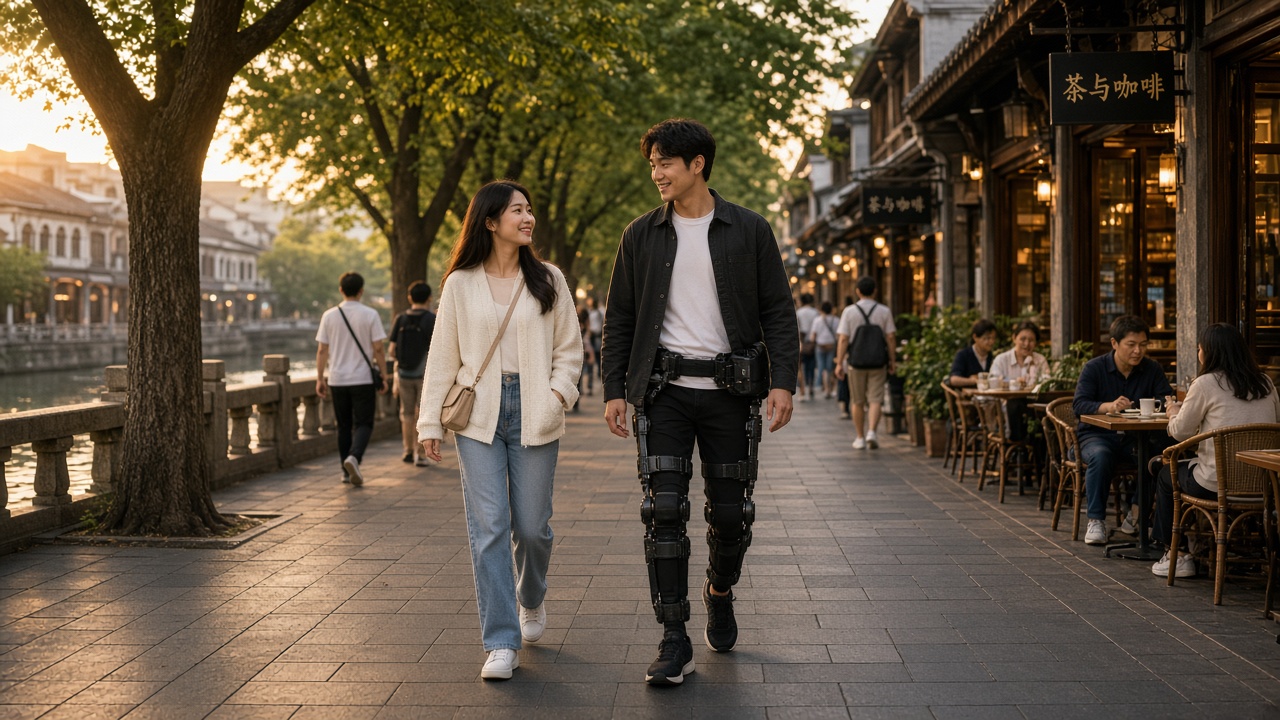
Scene · City
City Citywalk stores
Make roaming less about willpower alone.
Assist happens along waterfront and street walks; stores handle pickup, return, and turnover.
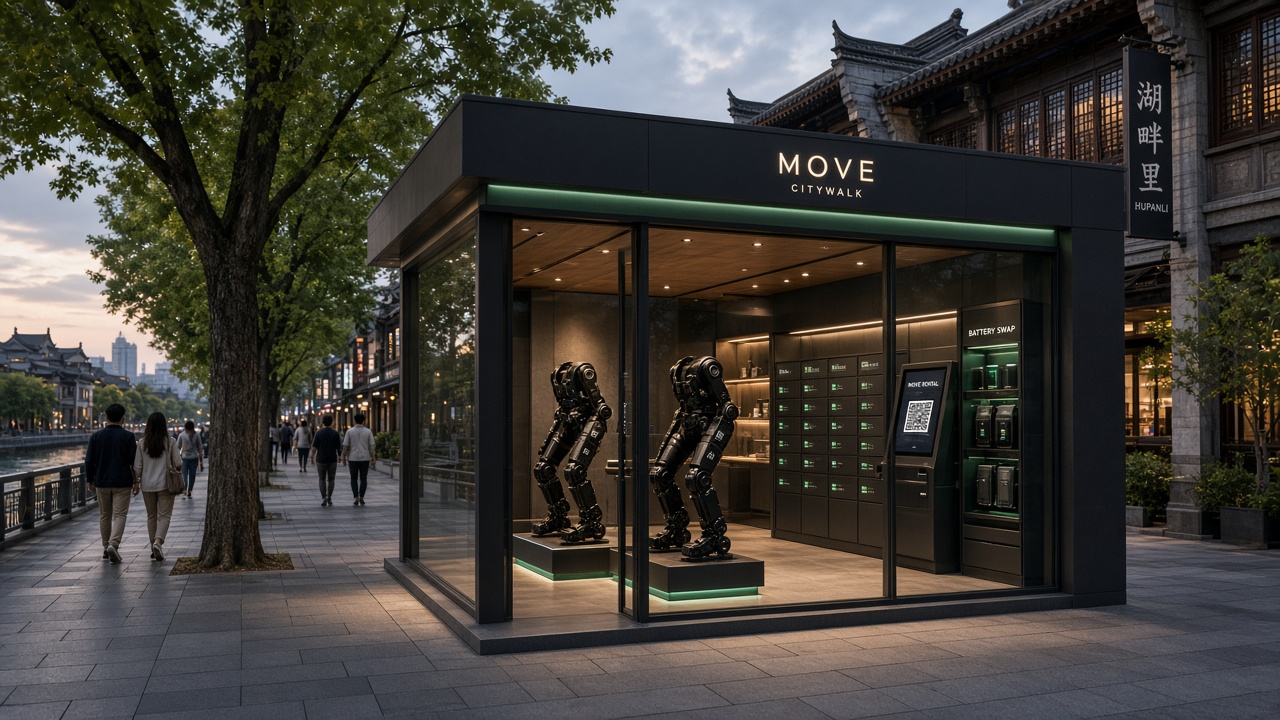
The store is the touchpoint; the network is the product
A city needs more than a single stall—it needs a network you can pick up and return to. Choose a store or kiosk based on space.
01
Boutique store
Staffed: display, fitting guidance, battery swap, and sanitizing—suited to a core walking starting point.
02
Street station / kiosk
Mostly self-service at space-limited nodes, filling in pickup/return density along the route.
03
Store + kiosk mix
A core store plus kiosks along the route, forming a network for half-day roaming with returns across points.
Where this lands first
The service fits into real walking routes: waterfront, old town, and retail districts.
Waterfront promenade
A long, flat route with continuous scenery, suited to half-day roaming and city visitors.
Old-town alleys
Winding walks with many stops; the service fits the rhythm of the neighborhood.
Retail district links
Multiple pickup/return points and short transfers, turning stores into a small network.
Assist limits for the city scene
Guigu™issues a gentler capability limit for city roaming; MOVE handles store standards, billing, sanitizing and battery swap, and cross-store returns.
- · Experience: scan with no deposit → fast on/off → return within the network
- · Fulfillment: stop on anomaly, hygiene with records, battery swap in sync
- · Network: start with one city, one store, then densify along walking routes
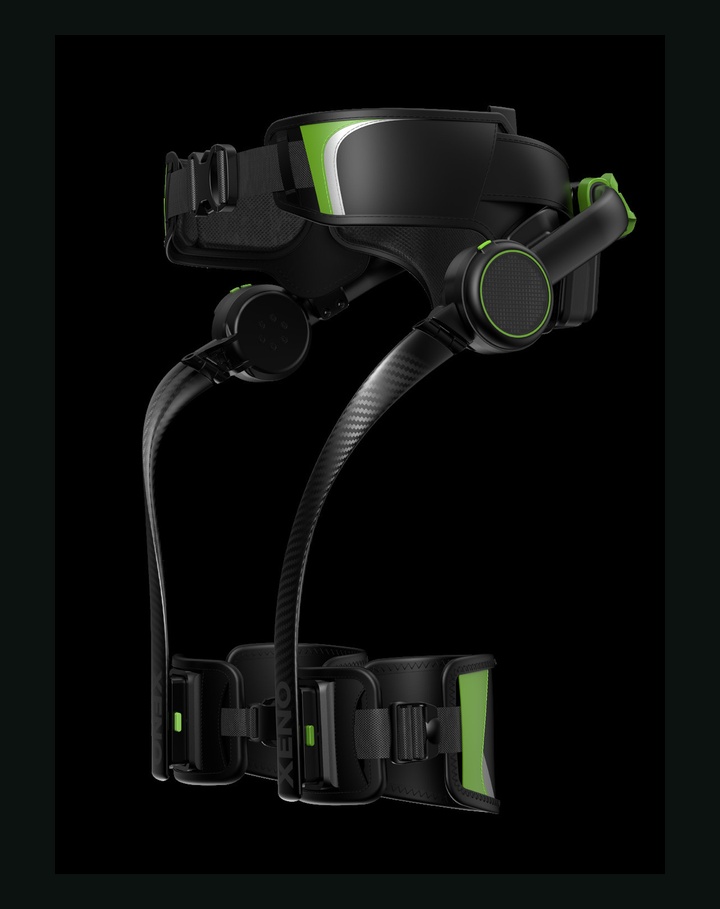
Who runs a city thoroughly with us
Store owners discuss the touchpoint, partners discuss regional execution. Separate contracts, one ledger.
One city, one store—then talk clustering
First prove traffic and staffing, then densify stations along the waterfront, old town, and retail districts.
Also looking at mountains?Mountain stations →